

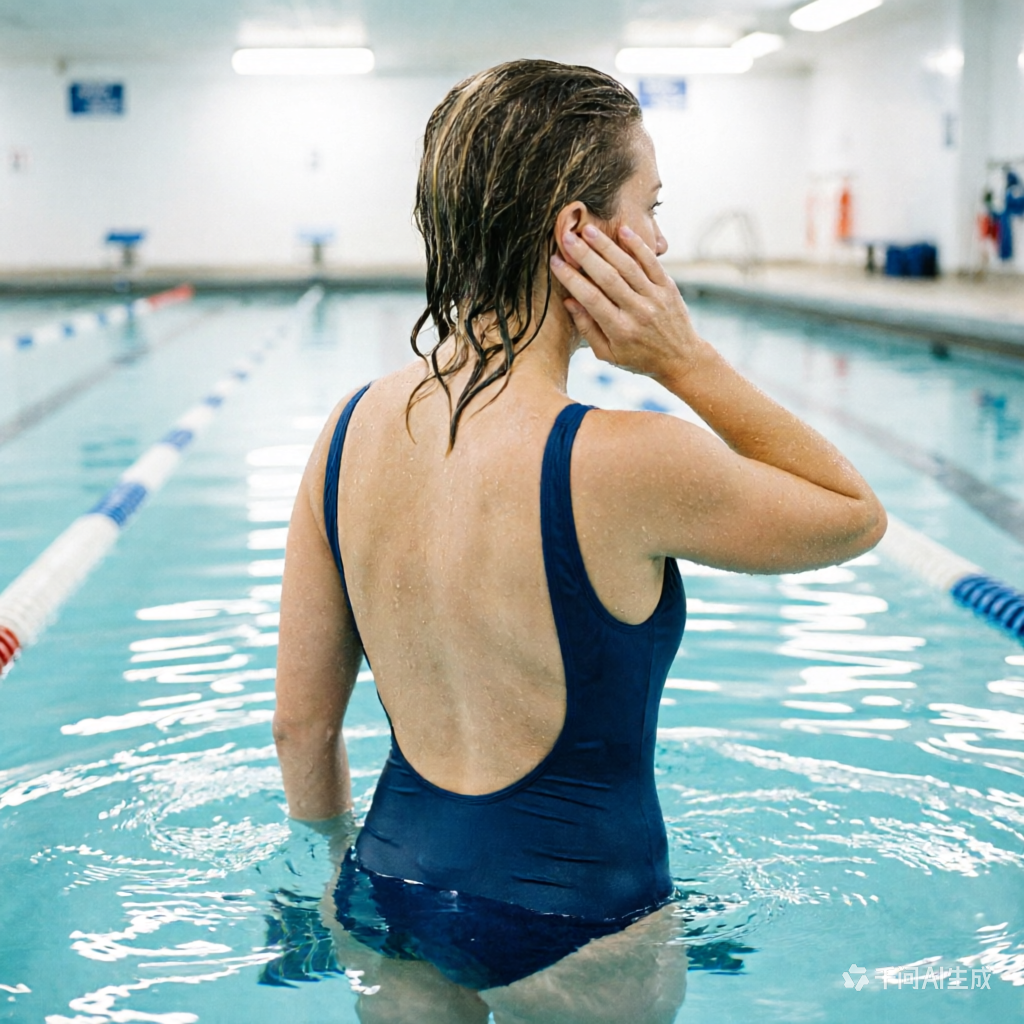
Water in your ear after swimming or showering is common. You may notice muffled hearing, a sloshing sensation, mild pressure, or the feeling that one ear is blocked.
Usually, the water drains on its own. However, when moisture remains in the ear canal, it may contribute to irritation and swimmer’s ear.
Here are some gentle ways to encourage drainage.
Let Gravity Do the Work
Tilt your head so the affected ear faces downward. Hold this position for several seconds and gently pull the outer ear up and back.
You can also lie on your side with the affected ear facing down for a few minutes. Sometimes the water drains naturally without any additional action.
Move Your Jaw
Jaw movement may slightly change the shape of the ear canal and help trapped water move.
Try:
- Yawning
- Chewing gum
- Opening and closing your mouth
- Moving your jaw gently from side to side
There is no need to force the movement or create strong pressure.

Dry the Outer Ear
Use a clean, soft towel to dry the outside of your ear.
Do not push the towel, cotton swab, or another object into the ear canal. The goal is to remove surface moisture, not to absorb water deep inside the ear.
Use a Hair Dryer Carefully
A hair dryer may help evaporate moisture when used correctly.
Follow these precautions:
- Use the lowest heat setting
- Use low airflow
- Hold it at least 30 centimeters away
- Keep it moving
- Stop if the ear feels hot or uncomfortable
Never use high heat directly near the ear.
Avoid Cotton Swabs
Cotton swabs can push water, wax, and skin debris deeper into the ear canal.
They may also cause:
- Scratches
- Irritation
- Swelling
- Impacted earwax
- Eardrum injury
The same warning applies to hairpins, keys, clips, and other small objects.
Can Ear Drops Help?
Some over-the-counter drying drops are designed for use after swimming. However, they are not suitable for everyone.
Do not use ear drops without professional guidance if you have:
- Ear tubes
- A known eardrum perforation
- Previous ear surgery
- Ear drainage
- Ear pain
- Bleeding
- Severe irritation
When in doubt, ask a healthcare professional or pharmacist first.
Water in the Ear or Earwax Buildup?
Sometimes the blocked sensation is caused by earwax rather than water. Earwax may also trap moisture and make the ear feel full.
If you suspect earwax, do not immediately flush the ear. First check whether you have pain, fluid, bleeding, dizziness, or sudden hearing changes.
For appropriate earwax-care situations, the PICLEEN E91 Electric Ear Wax Removal Kit features adjustable water pressure and temperature control.
The E91 is designed for earwax care. It is not intended to treat an ear infection or remove water from an injured ear.
If you want to visually inspect the outer ear first, the PICLEEN S1 Pro Earwax Removal Tool provides a camera view through a connected mobile device.
The S1 Pro should be used gently and should not be considered a medical diagnostic device.
Signs of Swimmer’s Ear
Moisture can sometimes contribute to inflammation of the outer ear canal, commonly called swimmer’s ear.
Possible signs include:
- Ear pain that gets worse when touching the outer ear
- Itching
- Redness or swelling
- A feeling of fullness
- Fluid or discharge
- Reduced hearing
- Increasing tenderness
If symptoms are getting worse, contact a healthcare professional.
When Should You Get Medical Advice?
Seek professional care if:
- Water remains trapped for more than one or two days
- Ear pain develops
- You notice fluid, pus, or blood
- Hearing becomes significantly reduced
- You feel dizzy or unsteady
- You have a history of ear surgery or eardrum problems
- Symptoms occur after diving or a major pressure change
How to Prevent Water from Staying in Your Ear
You can reduce the chance of trapped water by:
- Drying the outer ear after swimming
- Tilting your head after showering
- Wearing well-fitted swim earplugs
- Avoiding swimming in contaminated water
- Not inserting cotton swabs into the ear canal
- Keeping personal ear-care tools clean
Final Thoughts
Most water trapped in the ear can be managed with gravity, gentle jaw movement, careful drying, and patience.
Avoid inserting objects into the ear, and do not use drops or irrigation if you have pain, drainage, ear tubes, or a known eardrum problem.
If the blocked feeling continues or new symptoms appear, professional evaluation is the safest next step.
Why Does My Ear Feel Clogged? Common Causes and Safe Next Steps
Why Cotton Swabs Are Not Enough: Safe Ear Wax Removal At Home